
In Kabaddi's Professional Era, Efficiency Metrics Versus the Hype Market
কাবাড্ডি বিশ্লেষণের মূল সূত্র তিনটি: (১) মোট রেইড পয়েন্ট নয়, সাকসেসফুল রেইড শতাংশ ও ডু-অর-ডাই রূপান্তরই প্রকৃত দক্ষতার মাপকাঠি; (২) স্ট্যান্ডার্ড স্টাইল ও সার্কেল স্টাইলের স্কোরিং আলাদা, তাই মৌসুম-থেকে-মৌসুম পয়েন্ট সরাসরি তুলনীয় নয়; (৩) প্রতিযোগিতার স্তর (প্রো League / এশিয়ান Games / বিশ্বকাপ / রাজ্য / গ্রামীণ) আগে চিহ্নিত না করলে প্রতিপত্তি-ফোলানো প্রচার আলাদা করা যায় না। বাণিজ্যিকভাবে League একক সম্প্রচারকারীর ওপর নির্ভরশীল এবং প্রবাসী দর্শকের বাইরে বিদেশি স্বত্বের আয় নগণ্য। কাঠামোগত সর্ববৃহৎ ফাঁক মহিলাদের পেশাদার Leagueের অনুপস্থিতি, যা অলিম্পিক পথের তিনটি শর্ত—ফেডারেশনের সংখ্যা, মহাদেশীয় বিস্তার ও মহিলা খেলার গভীরতা—অতিক্রম করা কঠিন করে তোলে। নিলামের দাম বাজারের প্রত্যাশার সংকেত, খেলোয়াড়ের শক্তির চূড়ান্ত প্রমাণ নয়।
Inside the mat, a single thirty-second raid can turn an entire team's fortune. Outside it, the arithmetic is far more complicated. India's domestic professional league has made kabaddi the country's most successful non-cricket professional project, but the development story looks far smoother than the structure beneath it. Total raid points, tackle counts and auction prices together form kabaddi's market vocabulary — yet none of the three alone is enough to measure a player's true worth. That gap is the sport's biggest analytical challenge today.
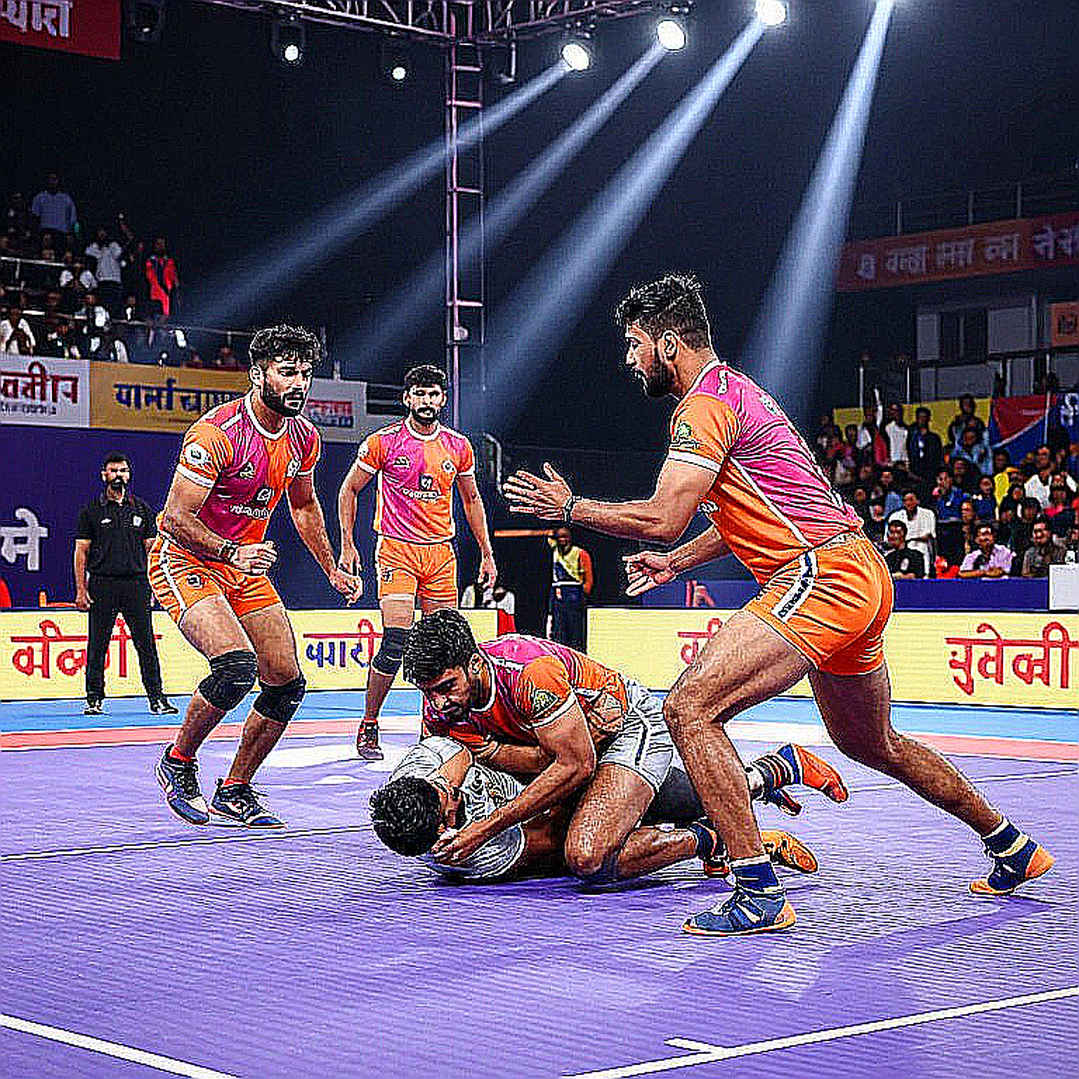
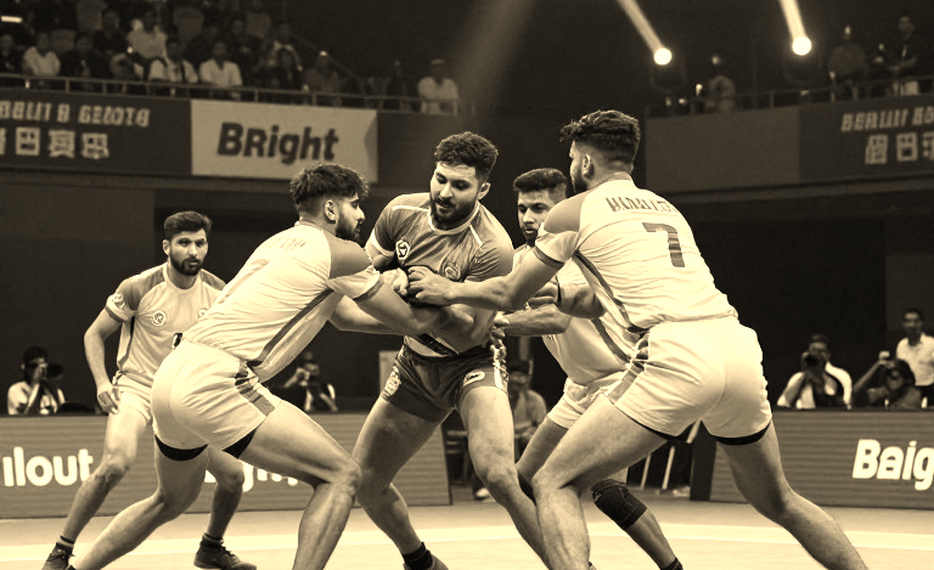
At the level of rules, kabaddi is at once simple and confusing. A raider must enter the opponent's half and return within thirty seconds; if he fails to return, the touch counts for nothing. Throughout the raid he must keep chanting 'kabaddi kabaddi' as proof he is not inhaling; break the chant and the raid is dead. If defenders collectively stop the raider in their own half, the defence scores. Crossing the deep bonus line in the opponent's half also earns a point, but only when the defending side has six or more players on court. And when all seven are out, the opponent gains two bonus points and the entire team revives — this 'all out reset' is what makes kabaddi a game of repeated comebacks.
But one layer of these rules is routinely muddled in reporting. Standard Style, played on the rectangular court in professional and international competition, differs materially from Circle Style, the circular-field rural Punjabi variant. Translation-driven sports coverage frequently blurs the two, so claims about 'records' or 'highest scores' get printed without a rule-era check. Professional league rules have shifted slightly season to season; totals from one season are therefore not directly comparable with another's. Without that caveat, any historical claim collapses.
On skill, kabaddi analysis must be efficiency-first. Looking only at raw raid points naturally favours the raider who attempts the most raids — that rewards attendance, not quality. What actually separates players is successful raid percentage, do-or-die conversion rate, and performance against strong corner pairings. A raider's numbers against an elite corner-cover combination and against weak defence differ sharply; season aggregates hide that gap. Likewise, tackle statistics must separate super tackles and high-leverage stops from sheer volume, otherwise defensive strength cannot be read.
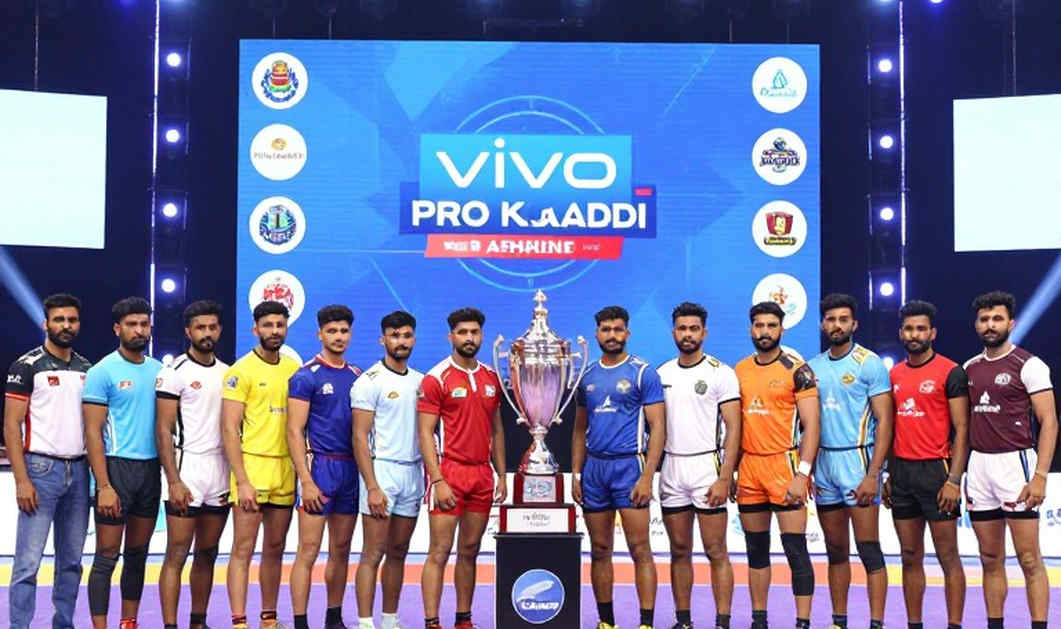
Identifying the competition tier is the first gate. Pro Kabaddi League, Asian Games, World Cup, state leagues and rural tournaments each carry entirely different prestige, star availability and commercial weight. In practice, commercial invitationals are often promoted in Asian Games-level language, and that inflated register misleads readers. Internationally, kabaddi's structure remains largely unipolar — India at the centre, Iran the only consistent challenger at men's level, and South Korea competitive at the bronze tier. Any claim of 'global expansion' that ignores this reality is incomplete.
Commercially, the biggest risk is single-broadcaster dependence. The league's revenue model rests largely on one broadcast network, and overseas rights generate negligible income outside the South Asian diaspora. Any commercial claim should be stress-tested against those two constraints. Auction reporting carries the highest inflation risk of all, because a price often reflects a player's most recent high-visibility tournament rather than two seasons of output. A price should be read as a market-expectation signal, not a final verdict on ability.
Culturally and regionally, kabaddi's roots lie in rural, lower-income households, where a railway, police or army job is the biggest incentive outside the league. That government-employment channel, more than any league intervention, shapes talent retention. But here lies journalism's biggest trap — one player's rise from a mud akhada to the big stage is real, yet it is often written up as proof of a systemic talent pipeline that participation data does not support. Conflating an individual case with a trend is this sport's habitual reporting error.
The landscape's biggest structural gap is women's kabaddi. There is no professional women's league parallel to the men's — a direct long-horizon risk to the talent pipeline. The Olympic pathway has repeatedly stalled on three hard criteria: the number of participating national federations, continental spread, and the development depth of the women's game. Any 'Olympic push' claim must be graded against those three gates, not against rhetorical ambition.
Governance matters too. The national federation has a history of election disputes and recognition crises, and that turbulence transmits directly to national-team eligibility — the path by which governance failure becomes competitive failure. Doping, officiating standards and rules standardisation also need separate tracking.
Taken together, kabaddi's professional project is the most successful template in India's non-cricket league ecosystem; the franchise-auction-prime-time formula built here has been copied by badminton, wrestling and volleyball leagues with far less success. But it should be read as a proof of concept, not a replicable formula. And the sport's most under-appreciated transmission channel is the two-way overseas player flow — Iranian and South Korean players raise the league's level while strengthening the base in their own countries, a rare alignment of league interest and international development interest. Judge by efficiency rather than volume, by tier rather than hype — only then does kabaddi's true picture emerge.
Related Players
Recommended
Seventeen to Twelve: India's Real Test at the First Commonwealth Kabaddi Championship in Ahmedabad2026-10-17
The Kabaddi Data Trap: How Distance and Sprint Numbers Mask the Truth on the Mat2026-11-05
Commonwealth Kabaddi Championship 2026: A List of Seventeen, and the Silence of Twelve Golden Names2026-10-08
Commonwealth Kabaddi Championship 2026: India's 17 Probables Leave Out the Asian Games Gold Squad, and the Field Math Matters More Than the Headline2026-10-09